
Apex Intelligence
Today’s Clear Lake Bass Probability Score
A credibility-first model for deciding which Clear Lake arm to fish, what pattern to start with, and which missing live data still needs verification before calling the bite.
Apex score
The score now pulls from free public sources and clearly labels missing or stale inputs.
Today’s Clear Lake Bass Probability Score
Know the best arm before you launch.
South lake: Rattlesnake arm rock piles, Keys deep docks, steep rocky banks, Cache Creek, and shad balls — especially when rain muddies the north bowl.
Bite windows
Timing is built from sunrise/sunset, wind, cloud cover, heat, and moon phase.
Start shallow around tules, outside grass edges, shade lanes, and clearer pockets before boat traffic and sun pressure build.
Move to dock shade, deeper tule edges, rock/dock transitions, and outside weed edges. Slow down if wind dies.
Look for windblown points, shade lines, and bait activity. Reaction baits improve if wind holds.
Patterns & lures
Recommended baits update from wind, heat, cloud cover, water temperature context, and algae/HAB risk.
Low light/cloud cover keeps shallow fish more willing to look up early and late.
HAB caution favors cleaner water, wind-mixed banks, shade, and deeper edges over stagnant shallow mats.
Zone scores
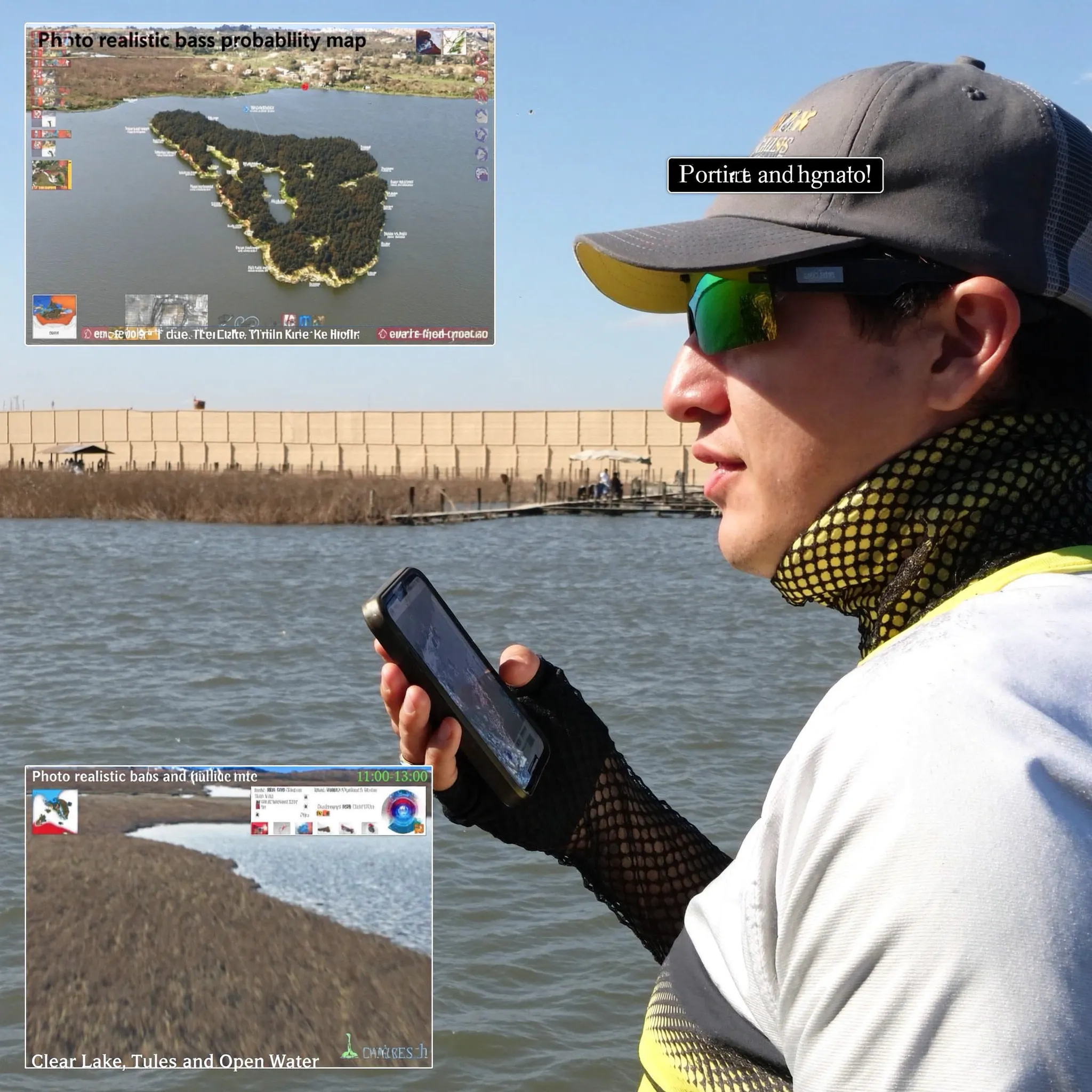
Each arm is scored separately before the best arm is selected and colored on the probability map.
Conditional / lower confidence
North bowl targeting from JD Blackmore: Lakeport docks, Nice/Lucerne docks and trees, Rodman Slough, tules/brush, and creek mouths can play when the water is not blown out. After rain, downgrade muddy runoff and hunt clearer pockets.
Conditional / lower confidence
Mid-lake/Oaks targeting from JD Blackmore: the transition near Soda Bay and Buckingham starts the steeper, rockier water with more depth under docks. Prioritize clear water, dock shade, rock/dock transitions, and shad moving past deeper docks.
Best current public-data read
South/Highlands targeting from JD Blackmore: Rattlesnake arm rock piles, the Keys, deep docks, steep rocky banks, Cache Creek, and shad balls are priority targets, especially in winter or after rain when clearer water may hold south/mid-lake.
Why this score?
The model explains the major boosts, caps, and confidence penalties instead of hiding the logic.
- Wind is outside the ideal range, so the model leans more selective.
- Latest public HAB record says Caution, so stagnant shallow-water confidence is capped.
- Moon phase is included for bite-window timing, but it is a smaller factor than wind, water, and algae risk.
- Highlands Arm is currently ranked highest after comparing heat, wind, algae/DO risk, and seasonal zone patterns.
Live public inputs
- USGS Clear Lake at Lakeport level: unavailable HTTP 503
- USGS Clear Lake water-quality mooring: unavailable HTTP 503
- NWS active alert near Clear Lake: Heat Advisory. Check official weather before launching.
- Water temperature is unavailable; treating seasonal water condition as estimated.
- Dissolved oxygen is unavailable; algae/low-DO risk remains a warning input.
- Latest selected HAB record is older than 14 days; check current shoreline conditions before fishing or swimming.
Free data sources checked
What the score will answer
- Which Clear Lake arm is most likely to produce a better bass count today.
- Best pattern, location type, depth band, and bite window.
- Which lure categories fit the active conditions.
- Confidence level and missing-data warnings.
Source discipline
Apex will use live or verified inputs only. If water temperature, clarity, algae/HAB risk, dissolved oxygen, lake level, or vegetation condition is unknown, the page says so instead of turning guesses into “today’s” facts.
Useful source categories include official advisories, lake-level data, weather/wind feeds, guide reports, tournament reports, public catch signals, and manual on-water observations.
Live public inputs now connected
The score now refreshes from no-fee public inputs: weather and wind, lake level, HAB reports, moon/sun timing, NWS active alerts, and USGS water-quality readings when current. Stale water-temperature or dissolved-oxygen readings are shown as context and clearly flagged instead of being treated as live lake truth.